Oct 12, 2026
Growth spurts bring important changes to children's teeth and jaws. Regular dental monitoring helps identify eruption…
(720) 638-6114
Mon & Fri: 8-2; Tue-Thurs: 9-5


Treat cavities in a
non-invasive and painless manner
Silver diamine fluoride, commonly called SDF, is a liquid dental treatment that may be used to help stop or slow the progression of certain cavities in children. Because it can be applied directly to an affected area without drilling the tooth, SDF can provide a minimally invasive option for selected pediatric patients.
At Little Rockies Kids Dental, silver diamine fluoride may be considered as part of an individualized cavity-management plan. It can be particularly useful when immediate restorative treatment is difficult, when a child has several areas of decay, or when delaying more involved treatment may be beneficial.
SDF does not rebuild missing tooth structure the way a filling or crown does, and it is not appropriate for every cavity. Our pediatric dental team first evaluates the tooth, the depth and location of the decay, your child's symptoms, dental development, and overall cavity risk before recommending treatment.
One important consideration is appearance: areas of active decay treated successfully with SDF generally become dark or black. We discuss this expected staining with parents before treatment so families can decide whether SDF is appropriate for their child's particular tooth and situation.
A Minimally Invasive Option for Selected Cavities
Silver diamine fluoride may help arrest tooth decay without immediately drilling or restoring the affected tooth, giving some children another option for managing cavities.
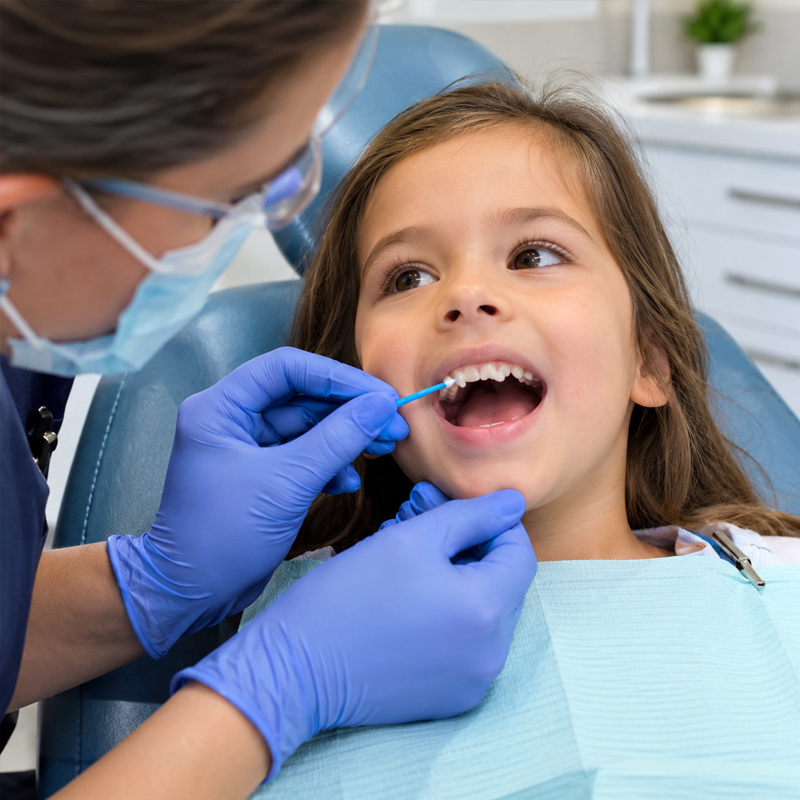
Silver diamine fluoride is a topical liquid used in dentistry to help arrest selected areas of active tooth decay. The solution combines silver and fluoride and is applied directly to the affected tooth surface with a very small applicator.
The treatment does not require removal of tooth structure before application in many situations. That can make SDF useful for children who may have difficulty tolerating a longer restorative procedure or for teeth where controlling the progression of decay is the immediate goal.
When a cavity responds to SDF, the treated decayed area typically becomes darker and harder. That change can be one indication that the lesion is becoming inactive.
SDF treatment still requires monitoring. Our dental team may evaluate the treated tooth at a follow-up visit, and additional applications may be recommended if the area remains active or if continued caries control is needed.
Silver diamine fluoride is one tool within pediatric cavity management. Depending on your child's teeth and the extent of the decay, SDF may be used alongside preventive care, monitoring, or later restorative treatment.
Before recommending SDF, we evaluate the affected tooth, symptoms, cavity depth, dental development, and whether preventive, minimally invasive, or restorative treatment is appropriate.
Cavities in KidsSDF can help manage decay, but it does not replace missing tooth structure. Some teeth may ultimately need a filling, crown, or another restoration to restore form and function.
Restorative DentistryControlling existing cavities is only part of the goal. Brushing with fluoride toothpaste, preventive dental visits, appropriate fluoride care, and other recommendations can help reduce the risk of new decay.
Preventive CareSome children who have extensive treatment needs may benefit from sedation or another treatment approach instead of, or following, SDF. Recommendations depend on the individual child's needs and planned dental care.
Pediatric Sedation DentistrySDF may be considered for children with active cavities when a minimally invasive approach offers an advantage. The decision is based on both the condition of the tooth and the individual needs of the child.
It may be useful for children who have several cavities, difficulty cooperating with longer dental procedures, certain medical or developmental considerations, or decay in an area that is difficult to treat immediately.
Silver diamine fluoride may also be useful when the goal is to control a cavity while a child grows, becomes more comfortable with dental care, or waits for another appropriate treatment.
However, SDF is not appropriate for every tooth. A tooth with signs suggesting involvement of the dental pulp, spontaneous pain, significant infection, or damage requiring other treatment needs a different evaluation and treatment plan.
The most noticeable tradeoff with SDF is color. Decayed tooth structure treated with SDF generally turns dark brown or black. Healthy tooth structure typically does not develop the same permanent dark staining, although temporary staining can occur if the material contacts nearby soft tissue.
For posterior baby teeth the color change may be less noticeable, while staining on a visible front tooth may be an important cosmetic consideration for parents and children. We review the expected appearance before treatment.

Is Silver Diamine Fluoride Right for Your Child?
SDF can be a valuable option for selected cavities, but the right treatment depends on the tooth, the extent of the decay, your child's symptoms, and their individual dental needs.
Silver diamine fluoride is applied to selected areas of active tooth decay to help arrest the caries process. It is used as part of an overall cavity-management plan rather than as a replacement for ongoing dental care.
Meet the pediatric dental and orthodontic providers caring for your child's smile.

Schedule a visit with our Parker pediatric dental and orthodontic team.

See what parents and families have to say about their experience at Little Rockies.

Explore preventive, restorative, pediatric dental and orthodontic care for growing smiles.

Kid-friendly dental care designed to keep young smiles healthy as they grow.

Dental care for the changing oral health needs of preteens and teenagers.

Explore braces, growth monitoring and orthodontic treatment for kids and teens.

Learn about clear aligner treatment for appropriate children and teens.

Blog Articles
We care about creating great smiles for kids, and teens. Follow us on our blog to review trending topic and resources in the dental industry and related healthcare.
Hours:
Monday & Friday: 8:00 AM - 2:00 PM | Tues, Wed, Thurs: 9:00 AM - 5:00PM | Closed: Select Mondays and Fridays


Nothing contained on or offered by or through this website should be construed as medical advice and should not be relied upon for medical diagnosis or treatment. By accessing this website you understand and agree to communication by phone, voicemail, email or text.
Cookie Preferences | Cookie Consent | Privacy Policy