Oct 26, 2026
Consistent family routines help children develop healthy oral care habits that last. Daily brushing, flossing, balanced…
(720) 638-6114
Mon & Fri: 8-2; Tue-Thurs: 9-5


Restoring great smiles
for your children
When a child's tooth is damaged by decay, injury, or another dental problem, restorative dentistry can help protect the tooth and return it to comfortable function. The appropriate treatment depends on the tooth involved, the extent of the damage, your child's symptoms, and where they are in their dental development.
Little Rockies Kids Dental provides restorative dentistry for children and teens with both baby teeth and permanent teeth. Treatment may include tooth-colored fillings, pediatric dental crowns, treatment for deeper decay, or other restorative care selected for your child's individual needs.
Not every area of tooth decay automatically requires a filling or crown. Early or noncavitated lesions may sometimes be managed with preventive or minimally invasive approaches, while teeth with more extensive damage may require restorative treatment.
Our goal is to preserve healthy tooth structure whenever possible while keeping your child's teeth comfortable and functional as their smile continues to develop.
Repairing Teeth. Protecting Growing Smiles.
Restorative dental care can help protect a damaged tooth, relieve problems caused by decay, and keep your child's smile functioning comfortably as they grow.
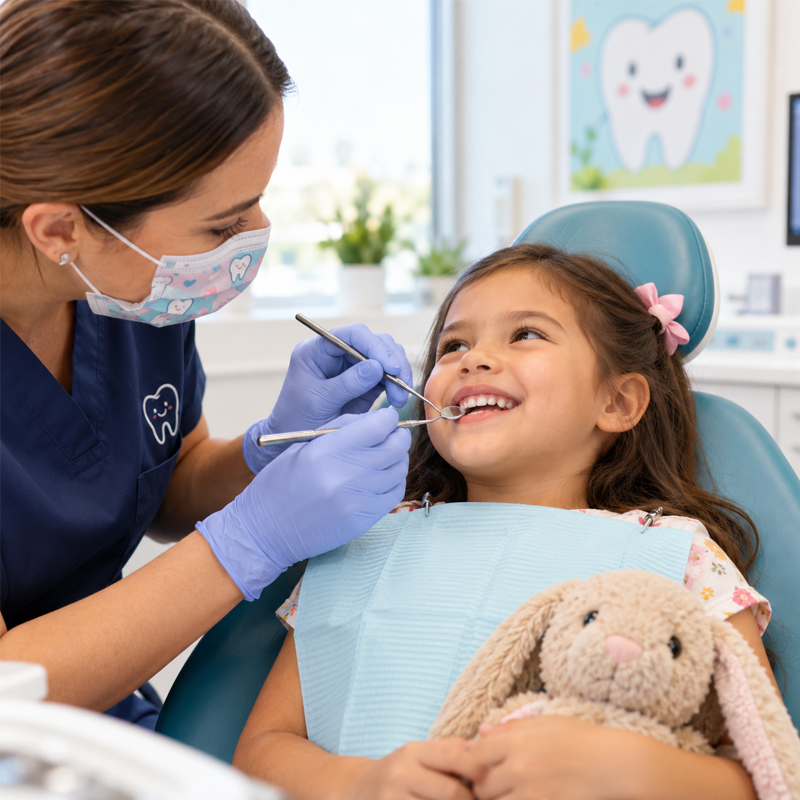
Restorative dentistry may be recommended when a tooth has been weakened or damaged enough that preventive care alone is no longer sufficient.
One of the most common reasons children need restorative treatment is tooth decay. When a cavity progresses into the tooth and creates an actual defect or loss of tooth structure, a restoration may be needed to repair and protect the remaining tooth.
Children may also need restorative care after a tooth is chipped or fractured, when a developmental defect has weakened a tooth, or when a previous restoration needs to be repaired or replaced.
Before recommending treatment, we evaluate the tooth, symptoms, amount of healthy tooth structure remaining, dental development, and whether the affected tooth is a primary or permanent tooth.
The type of restoration recommended depends on how much of the tooth is affected, the location of the tooth, your child's dental development, and how long the tooth is expected to remain in the mouth.
Dental fillings may be used to repair appropriate cavities or areas where a tooth has lost a limited amount of structure. Tooth-colored restorative materials can restore the shape and function of the affected tooth.
Pediatric Cavity TreatmentWhen a tooth has extensive decay or has lost too much structure for a filling to predictably restore it, a crown may provide greater coverage and protection. Depending on the tooth and clinical situation, options may include stainless steel or tooth-colored crowns.
Tooth Decay in ChildrenFalls, sports, and other accidents can damage baby teeth or permanent teeth. Treatment depends on the location and depth of the fracture and whether the pulp or supporting tissues have been affected.
Pediatric Dental EmergenciesIf decay extends close to or into the dental pulp, additional treatment may be needed before the tooth can be restored. The recommended approach depends on the health of the pulp, the tooth involved, symptoms, and whether the tooth can be predictably restored.
Pediatric Tooth InfectionsWhether an affected tooth is a baby tooth or permanent tooth is an important part of treatment planning, but being a baby tooth does not automatically mean a damaged tooth can simply be ignored.
Primary teeth help children bite and chew, contribute to speech development, and maintain space while permanent teeth continue developing beneath the gums. Some baby teeth remain in the mouth for many years before they naturally fall out.
When a baby tooth develops significant decay, the decision to restore it depends on the amount of damage, symptoms, the particular tooth, your child's age, and how long the tooth is expected to remain in place.
Permanent teeth require long-term protection because they are intended to remain throughout adulthood. Conserving healthy tooth structure and selecting an appropriate restoration can help protect a damaged permanent tooth while your child's mouth continues to mature.
In some situations, a tooth may be too damaged or infected to restore predictably. If that occurs, we can discuss whether extraction or another treatment approach is appropriate and what the next steps may be for your child's developing smile.

Restorative Care for a Healthier, Comfortable Smile
If your child has a cavity, broken tooth, damaged restoration, or another dental concern, Little Rockies Kids Dental can evaluate the tooth and recommend treatment based on your child's individual needs.
Restorative pediatric dentistry focuses on repairing teeth that have been damaged by tooth decay, fractures, developmental problems, or other dental conditions. Treatment may include fillings, crowns, pulp treatment, or other procedures selected according to the affected tooth and your child's individual needs.
Meet the pediatric dental and orthodontic providers caring for your child's smile.

Schedule a visit with our Parker pediatric dental and orthodontic team.

See what parents and families have to say about their experience at Little Rockies.

Explore preventive, restorative, pediatric dental and orthodontic care for growing smiles.

Kid-friendly dental care designed to keep young smiles healthy as they grow.

Dental care for the changing oral health needs of preteens and teenagers.

Explore braces, growth monitoring and orthodontic treatment for kids and teens.

Learn about clear aligner treatment for appropriate children and teens.

Blog Articles
We care about creating great smiles for kids, and teens. Follow us on our blog to review trending topic and resources in the dental industry and related healthcare.
Hours:
Monday & Friday: 8:00 AM - 2:00 PM | Tues, Wed, Thurs: 9:00 AM - 5:00PM | Closed: Select Mondays and Fridays


Nothing contained on or offered by or through this website should be construed as medical advice and should not be relied upon for medical diagnosis or treatment. By accessing this website you understand and agree to communication by phone, voicemail, email or text.
Cookie Preferences | Cookie Consent | Privacy Policy