Oct 12, 2026
Growth spurts bring important changes to children's teeth and jaws. Regular dental monitoring helps identify eruption…
(720) 638-6114
Mon & Fri: 8-2; Tue-Thurs: 9-5


Smile with
dental braces
Self-ligating braces are a type of fixed orthodontic treatment that use specialized brackets with a built-in clip or door to hold the orthodontic archwire in place. Unlike traditional braces, which commonly use small elastic ties around each bracket, self-ligating brackets secure the wire without those individual elastic ligatures.
At Little Rockies Kids Dental, we provide self-ligating braces in Parker, CO for appropriate children and teens as part of our pediatric orthodontic services.
Like traditional braces, self-ligating braces gradually guide the teeth into planned positions and may be used to help address crowding, spacing, crooked teeth, and bite alignment concerns.
Our orthodontic provider can evaluate your child's teeth, bite, and stage of dental development and explain whether self-ligating braces, traditional braces, clear braces, or another orthodontic treatment may be appropriate.
A Different Approach to Fixed Braces
Self-ligating braces use brackets with a built-in mechanism to secure the orthodontic wire while providing the continuous tooth movement associated with fixed braces.
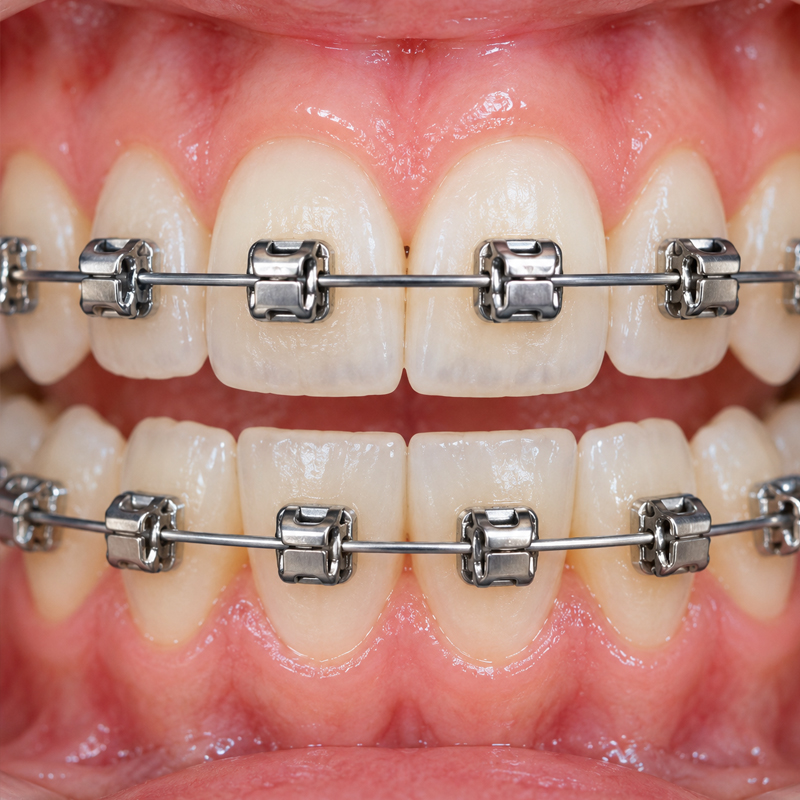
All fixed braces rely on brackets and an orthodontic archwire to gradually move teeth. The main difference with self-ligating braces is the way the wire is held inside each bracket.
Instead of using a small elastic tie around every bracket, a self-ligating bracket contains a built-in clip or sliding door that opens and closes around the archwire.
As treatment progresses, the orthodontic provider monitors tooth movement and may replace or adjust the archwire to continue guiding the teeth toward their planned positions.
Self-ligating brackets may be available in metal or more discreet ceramic materials depending on the treatment system being used and the patient's needs.
Self-ligating braces and traditional braces are both fixed orthodontic appliances and can be used to correct many of the same tooth and bite alignment concerns.
The primary difference is how the archwire is secured:
Self-ligating systems are sometimes promoted as being faster or more comfortable than conventional braces. However, research has not consistently shown meaningful differences in overall treatment time or discomfort between the two systems.
The best option depends more on the individual patient's orthodontic needs, treatment plan, and the appliance system recommended by the provider.

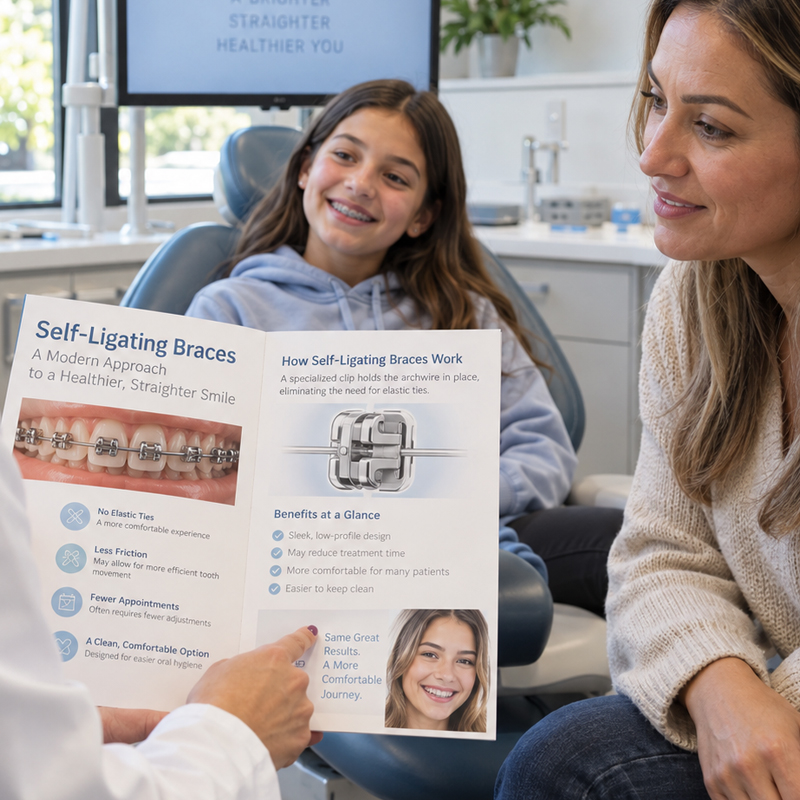
Self-ligating braces may be considered for children or teens who need fixed orthodontic treatment for concerns involving tooth alignment or bite development.
Depending on the individual treatment plan, braces may be used to help address:
Not every patient needs the same type of braces. An orthodontic evaluation allows us to determine which treatment approach provides the most appropriate control and tooth movement for your child's smile.
Self-ligating braces remain attached to the teeth throughout active treatment. Your child will return for scheduled orthodontic visits so our provider can monitor progress and make any necessary changes to the archwire or treatment plan.
As with other types of fixed braces, temporary tenderness or pressure may occur when braces are first placed or after orthodontic adjustments. Most patients gradually become accustomed to the appliance.
Good brushing and flossing are also important because food and plaque can collect around brackets and wires. Your child should continue regular dental visits and follow the orthodontic team's instructions for caring for the braces.
Hard, sticky, and very crunchy foods may need to be avoided or modified to reduce the risk of damaging brackets or wires.
Self-Ligating Braces in Parker, CO
If your child or teenager may benefit from orthodontic treatment, an evaluation can help determine which type of braces is best suited to their developing smile.
Contact Little Rockies Kids Dental to schedule an orthodontic evaluation and learn whether self-ligating braces may be an option for your child.
Self-ligating braces use brackets with a built-in clip or door to hold the orthodontic archwire. Traditional braces commonly use small elastic ties around each bracket to secure the wire.
Meet the pediatric dental and orthodontic providers caring for your child's smile.

Schedule a visit with our Parker pediatric dental and orthodontic team.

See what parents and families have to say about their experience at Little Rockies.

Explore preventive, restorative, pediatric dental and orthodontic care for growing smiles.

Kid-friendly dental care designed to keep young smiles healthy as they grow.

Dental care for the changing oral health needs of preteens and teenagers.

Explore braces, growth monitoring and orthodontic treatment for kids and teens.

Learn about clear aligner treatment for appropriate children and teens.

Blog Articles
We care about creating great smiles for kids, and teens. Follow us on our blog to review trending topic and resources in the dental industry and related healthcare.
Hours:
Monday & Friday: 8:00 AM - 2:00 PM | Tues, Wed, Thurs: 9:00 AM - 5:00PM | Closed: Select Mondays and Fridays


Nothing contained on or offered by or through this website should be construed as medical advice and should not be relied upon for medical diagnosis or treatment. By accessing this website you understand and agree to communication by phone, voicemail, email or text.
Cookie Preferences | Cookie Consent | Privacy Policy