Sep 28, 2026
Pediatric dentists help children develop lifelong healthy habits by combining preventive care, age-appropriate education,…
(720) 638-6114
Mon & Fri: 8-2; Tue-Thurs: 9-5


All The Care
You Need On-Site
There are times when removing a tooth is the healthiest option for a child's developing smile. At Little Rockies Kids Dental, we provide tooth extractions for children and teens in Parker, CO when a tooth cannot be predictably restored, is causing infection or other problems, or needs to be removed as part of a carefully planned dental or orthodontic treatment.
Whenever possible, our goal is to preserve healthy natural teeth. Before recommending an extraction, our pediatric dental team evaluates the tooth, your child's age and dental development, the surrounding teeth, and the available treatment options.
Depending on the situation, dental X-rays may be used to evaluate the roots of the tooth, the developing permanent teeth, and nearby structures before treatment.
When a Tooth Needs to Come Out
A tooth extraction may sound intimidating to a child or parent, but pediatric dental extractions are planned carefully with your child's comfort, dental development, and long-term oral health in mind.

Children may need a tooth removed for several different reasons. An extraction is not automatically necessary simply because a tooth has a cavity or because it is a baby tooth.
Reasons an extraction may be recommended include:
AAPD guidance similarly identifies nonrestorable, overretained, traumatized, impacted and supernumerary teeth among the situations considered in pediatric oral surgery, while extraction of selected primary teeth can also play a role in managing eruption problems.
No. The appropriate treatment depends on the individual tooth.
Some teeth affected by decay may be treated with a filling, crown, or another restorative procedure. Depending on the condition of the dental pulp and the restorability of the tooth, pulp therapy may also be an option for certain primary or permanent teeth.
Extraction becomes more likely when a tooth cannot be predictably restored, infection cannot be adequately controlled with another treatment, there is insufficient healthy tooth structure remaining, or other developmental factors make removing the tooth the more appropriate option. AAPD guidance specifically recommends considering factors such as restorability and alternatives to pulp treatment before extraction.
Our pediatric dental team will explain what we find and discuss the available treatment options before proceeding.

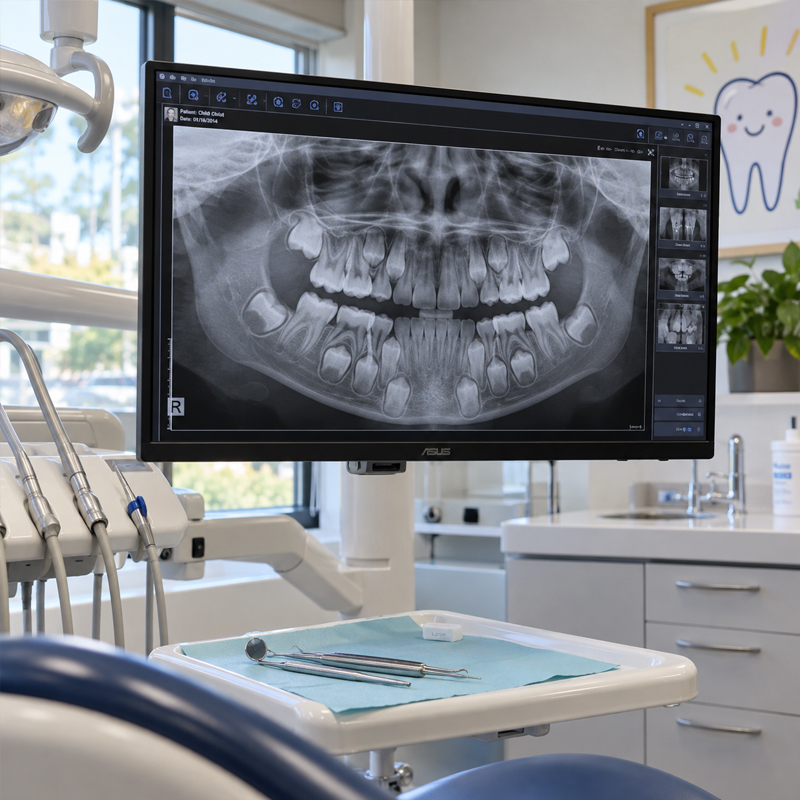
Before recommending an extraction, we look at more than just the tooth that is causing the immediate concern.
Depending on your child's situation, the evaluation may include:
Dental X-rays may be recommended when they are clinically appropriate to help evaluate structures that cannot be fully assessed during a visual examination.
What Should We Expect After a Tooth Extraction?
After an extraction, a blood clot forms in the socket where the tooth was removed and begins the healing process. Our team will provide specific post-treatment instructions based on your child's procedure. These may include guidance about controlling minor bleeding, eating and drinking, oral hygiene, activity, and managing temporary soreness.
Because your child's mouth may remain numb for a period after treatment, parents should pay particular attention to prevent children from accidentally biting or chewing their lip, cheek, or tongue.
Contact our office if you have concerns about your child's recovery or if your child develops symptoms such as persistent bleeding, increasing swelling, worsening pain, fever, or another unexpected problem.
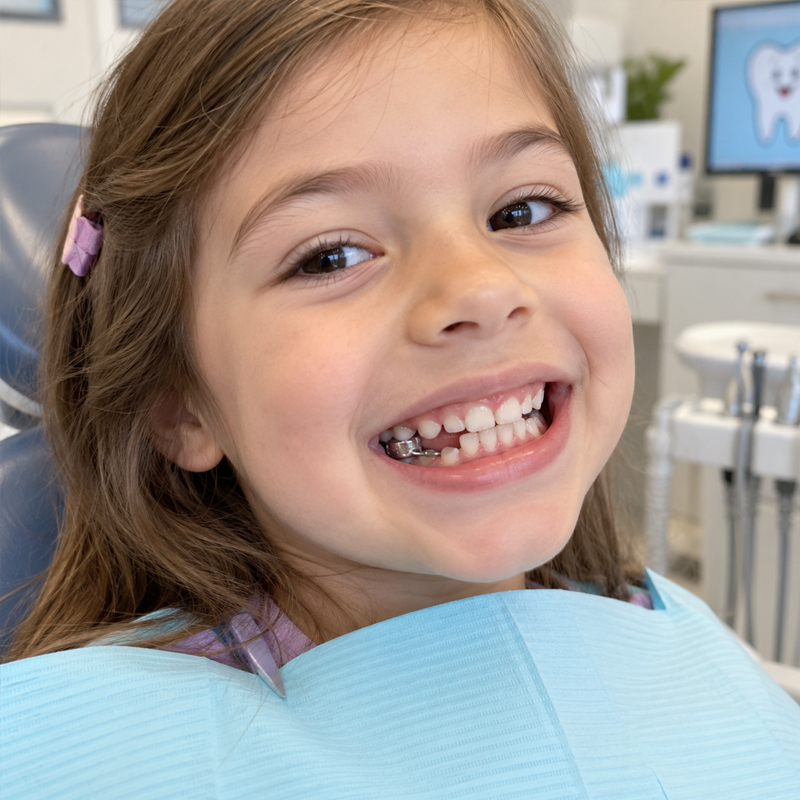
Sometimes. When a baby tooth is lost significantly earlier than expected, nearby teeth may move into the available space. This can reduce the room available for the permanent tooth that will eventually erupt into that area.
However, not every prematurely lost baby tooth requires a space maintainer.
The decision depends on factors such as:
AAPD guidance recommends considering space maintenance following premature loss of primary teeth as part of managing the developing dentition, while recognizing that the decision should be individualized.
If your child may benefit from space maintenance, our team can discuss this with you as part of the treatment plan.
Occasionally, removing a tooth may be part of an orthodontic treatment plan.This is more complicated than simply deciding that a child's teeth are “too large for their mouth.” Orthodontic treatment planning considers available arch space, crowding, tooth position, eruption patterns, bite relationships, facial and jaw development, and the goals of treatment.
When an extraction is being considered for orthodontic reasons, the decision should be coordinated with the child's overall orthodontic treatment plan. AAPD guidance similarly emphasizes diagnosis and treatment planning when managing crowding, eruption disturbances, and arch-length concerns in the developing dentition.

Tooth Extractions for Kids in Parker, CO
If your child has a severely damaged tooth, dental infection, retained baby tooth, eruption problem, or another condition that may require an extraction, Little Rockies Kids Dental can evaluate the tooth and explain the available options.
Our goal is to recommend treatment based on your child's individual dental needs while considering comfort, healthy development, and the long-term health of their smile.
The treatment area is numbed with local anesthetic before the tooth is removed. Your child may notice pressure or movement during the procedure. Our team will explain what to expect and take steps to help your child remain comfortable throughout treatment.
Meet the pediatric dental and orthodontic providers caring for your child's smile.

Schedule a visit with our Parker pediatric dental and orthodontic team.

See what parents and families have to say about their experience at Little Rockies.

Explore preventive, restorative, pediatric dental and orthodontic care for growing smiles.

Kid-friendly dental care designed to keep young smiles healthy as they grow.

Dental care for the changing oral health needs of preteens and teenagers.

Explore braces, growth monitoring and orthodontic treatment for kids and teens.

Learn about clear aligner treatment for appropriate children and teens.

Blog Articles
We care about creating great smiles for kids, and teens. Follow us on our blog to review trending topic and resources in the dental industry and related healthcare.
Hours:
Monday & Friday: 8:00 AM - 2:00 PM | Tues, Wed, Thurs: 9:00 AM - 5:00PM | Closed: Select Mondays and Fridays


Nothing contained on or offered by or through this website should be construed as medical advice and should not be relied upon for medical diagnosis or treatment. By accessing this website you understand and agree to communication by phone, voicemail, email or text.
Cookie Preferences | Cookie Consent | Privacy Policy