Oct 12, 2026
Growth spurts bring important changes to children's teeth and jaws. Regular dental monitoring helps identify eruption…
(720) 638-6114
Mon & Fri: 8-2; Tue-Thurs: 9-5


Dental Braces
for your teens & Kids
Traditional braces remain one of the most dependable and versatile ways to straighten teeth and improve bite alignment. At Little Rockies Kids Dental, we provide traditional braces for kids and teens in Parker, CO as part of our pediatric orthodontic services.
Braces use a system of brackets and an archwire to apply gentle, controlled pressure to the teeth over time. Depending on your child's orthodontic needs, braces may be used to address crowded or crooked teeth, excessive spacing, overbites, underbites, crossbites, and other tooth or bite alignment concerns.
Today's dental braces are smaller and more streamlined than earlier generations. Children and teens may also have choices in how their braces look, including traditional metal brackets, colored elastic bands, or less noticeable clear ceramic braces.
Our orthodontic provider can evaluate your child's teeth, bite, and stage of dental development and discuss whether traditional braces are an appropriate treatment option.
Braces for Kids and Teens in Parker
Every smile develops differently. Traditional braces can provide precise, predictable tooth movement for many different orthodontic concerns while giving children and teens a treatment option that does not depend on remembering to insert and remove an appliance each day.

Braces are used to gradually guide teeth into planned positions and can help improve both tooth alignment and the way the upper and lower teeth fit together. Because braces remain attached to the teeth throughout treatment, the orthodontic provider maintains continuous control over tooth movement.
Traditional braces may be recommended for concerns such as:
The type and complexity of orthodontic treatment varies from child to child. An orthodontic evaluation allows us to examine your child's teeth and bite and recommend an individualized treatment plan.
Traditional metal braces consist of small brackets that are bonded to the teeth and connected by an orthodontic archwire. The archwire works with the brackets to apply gentle pressure that gradually moves teeth toward their planned positions.
Small elastic ties, sometimes called ligatures, are commonly used to hold the archwire in place. For many kids and teens, choosing different colored bands at orthodontic visits is a fun way to personalize their braces.
Throughout treatment, your child will return for regular orthodontic visits so the progress of the teeth and bite can be evaluated and the appliance can be adjusted as needed.
Treatment time varies because every patient's teeth, bite, growth, and orthodontic needs are different.


Some children and teens want the reliability of fixed braces but would prefer an option that is less noticeable. Clear ceramic braces work similarly to traditional metal braces but use clear or tooth-colored brackets designed to blend more naturally with the teeth.
Unlike clear aligners, ceramic braces remain attached to the teeth throughout treatment. That means your child does not need to remember to put an appliance back in after meals or brushing.
Ceramic braces are not necessarily the best choice for every patient. Metal brackets may be preferred for certain orthodontic needs, while ceramic brackets may appeal to older children or teens who are especially concerned about the appearance of their braces.
Our orthodontic provider can explain the differences between traditional metal braces and clear ceramic braces and help your family determine which option fits your child's treatment needs and lifestyle.
Adolescence is a common time for orthodontic treatment because many permanent teeth have erupted and the developing bite can be evaluated more completely. For teenagers with crowding, spacing, crooked teeth, or bite concerns, traditional braces may provide an effective way to guide the teeth into better alignment.
Teenagers also have several aesthetic choices. Traditional metal braces can be personalized with colored bands, while ceramic braces provide a more subtle appearance. Depending on the orthodontic condition, some teens may also qualify for Invisalign® clear aligners.
Sports, school, music, and other activities can generally continue during orthodontic treatment. Our team will provide instructions for protecting the braces and teeth during treatment and can discuss appropriate protection for contact sports.


Getting braces is a new experience, but most children and teens adapt quickly. When braces are placed, brackets are bonded to the teeth and the orthodontic wire is secured to the brackets.
Your child may experience temporary tenderness or pressure after braces are first placed or following an adjustment. This generally reflects the gentle forces being used to move the teeth.
Before leaving the office, your family will receive instructions for brushing, flossing, eating with braces, and what to do if a bracket or wire becomes loose or damaged.
Regular orthodontic appointments are important so we can monitor progress and make changes to the appliance as treatment advances.
Good oral hygiene becomes especially important during orthodontic treatment. Brackets and wires create additional spaces where food and plaque can collect, so children and teens need to clean carefully around their braces.
During treatment, we encourage patients to:
Keeping the teeth and gums healthy during orthodontic treatment helps protect your child's smile while the teeth are being moved into their new positions.
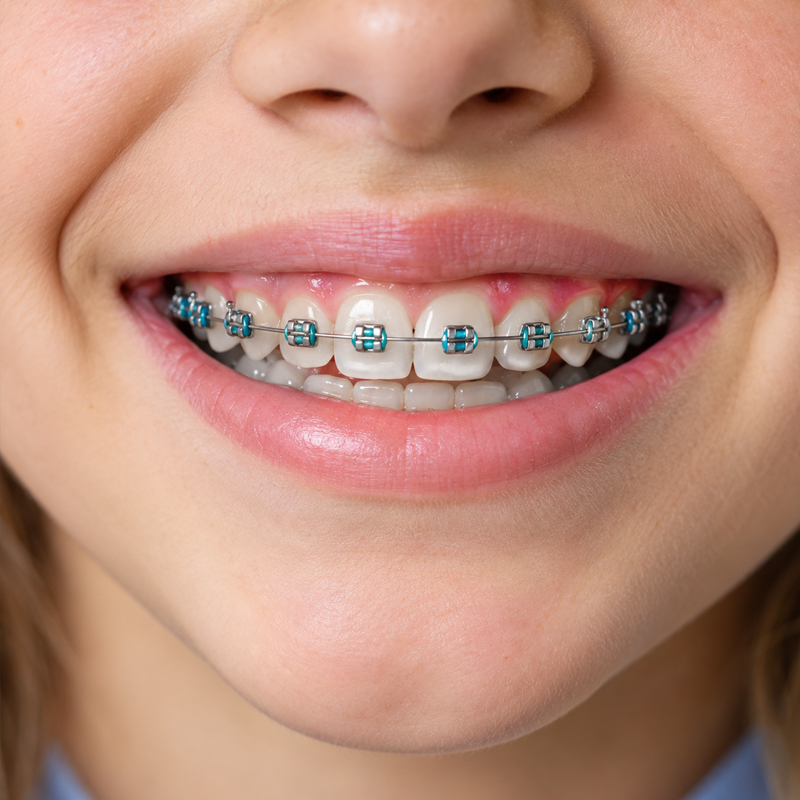
Self-ligating braces are another type of fixed orthodontic appliance. Instead of using traditional elastic ties to hold the archwire in the brackets, self-ligating brackets contain a built-in clip or door that secures the wire.
Because Little Rockies Kids Dental has a dedicated page explaining this treatment option, we recommend reviewing that information if your family is comparing different types of fixed braces.
Traditional Braces in Parker, CO
Choosing orthodontic treatment begins with understanding your child's individual smile. Our orthodontic provider can evaluate tooth alignment, bite development, and treatment needs and discuss whether metal braces, clear ceramic braces, self-ligating braces, or clear aligners may be appropriate.
If your child or teenager may need braces, contact Little Rockies Kids Dental to schedule an orthodontic evaluation in Parker.
Traditional braces use brackets attached to the teeth and an orthodontic archwire to apply gentle pressure. Over time, this pressure gradually guides teeth toward their planned positions and can also help correct bite alignment.
Meet the pediatric dental and orthodontic providers caring for your child's smile.

Schedule a visit with our Parker pediatric dental and orthodontic team.

See what parents and families have to say about their experience at Little Rockies.

Explore preventive, restorative, pediatric dental and orthodontic care for growing smiles.

Kid-friendly dental care designed to keep young smiles healthy as they grow.

Dental care for the changing oral health needs of preteens and teenagers.

Explore braces, growth monitoring and orthodontic treatment for kids and teens.

Learn about clear aligner treatment for appropriate children and teens.

Blog Articles
We care about creating great smiles for kids, and teens. Follow us on our blog to review trending topic and resources in the dental industry and related healthcare.
Hours:
Monday & Friday: 8:00 AM - 2:00 PM | Tues, Wed, Thurs: 9:00 AM - 5:00PM | Closed: Select Mondays and Fridays


Nothing contained on or offered by or through this website should be construed as medical advice and should not be relied upon for medical diagnosis or treatment. By accessing this website you understand and agree to communication by phone, voicemail, email or text.
Cookie Preferences | Cookie Consent | Privacy Policy