Sep 28, 2026
Pediatric dentists help children develop lifelong healthy habits by combining preventive care, age-appropriate education,…
(720) 638-6114
Mon & Fri: 8-2; Tue-Thurs: 9-5


Helping Your Child
Maintain Good Oral Health
Healthy teeth begin with the habits children practice at home every day. Brushing, cleaning between the teeth, using fluoride appropriately, and learning how to care for a growing smile can help reduce plaque buildup and lower the risk of cavities.
Little Rockies Kids Dental helps children and parents understand age-appropriate oral hygiene. As children grow from toddlers into school-age kids and teenagers, the amount of help they need changes, but good brushing and flossing habits remain an important part of pediatric dental care.
Our pediatric dental team can show your child how to clean difficult-to-reach areas, identify places where plaque tends to accumulate, and give parents practical recommendations based on their child's age, dental development, cavity risk, and orthodontic treatment.
Healthy Habits Start at Home
Helping children learn how to care for their teeth can build routines that protect both baby teeth and permanent teeth as their smiles grow.
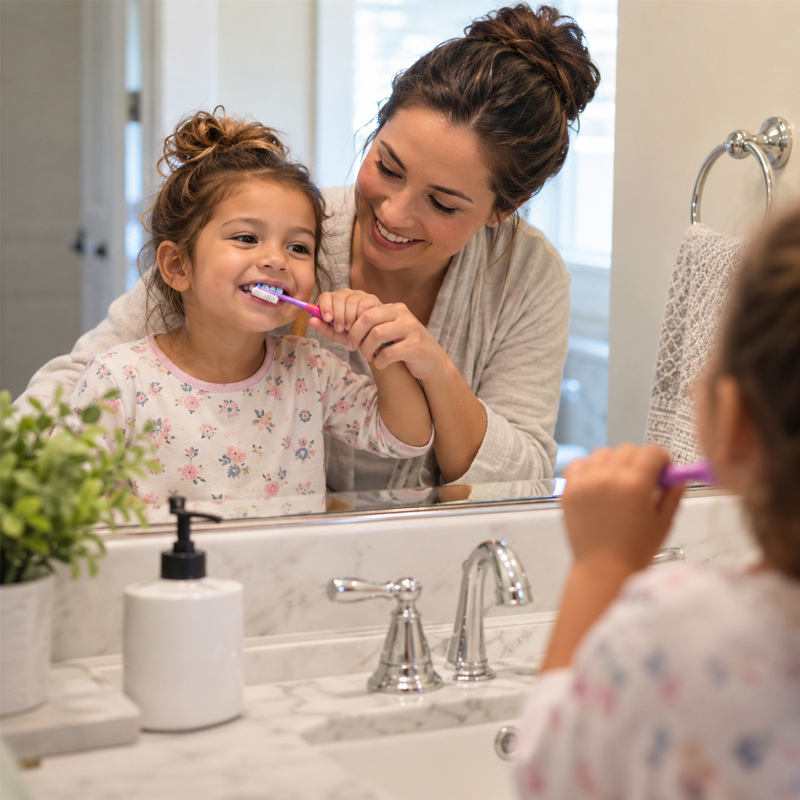
Children should brush their teeth twice each day using a soft-bristled toothbrush and fluoride toothpaste. Brushing should clean the front, back, and chewing surfaces of the teeth as well as the areas along the gumline.
For children younger than age 3, use only a small smear of fluoride toothpaste about the size of a grain of rice. Children ages 3 through 6 should use no more than a pea-sized amount.
Young children usually do not have the coordination to thoroughly clean every surface of every tooth on their own. Parents should perform or assist with brushing and continue supervising as children gradually become more independent.
As children grow, our dental team can point out areas they may be missing and help them improve their brushing technique without making home dental care feel overwhelming.
Daily oral hygiene does not have to be complicated. A consistent routine can help children remove plaque, protect developing teeth, and become more confident caring for their own smiles.
Morning and bedtime brushing with fluoride toothpaste helps remove plaque and food from tooth surfaces while providing fluoride that helps protect tooth enamel.
Preventive CareA toothbrush cannot fully clean the areas where neighboring teeth contact one another. Daily flossing or another age-appropriate method of cleaning between the teeth can help remove plaque from these spaces.
Dental CleaningsFluoride toothpaste is an important part of cavity prevention. The amount used should be appropriate for your child's age, and younger children should be supervised while brushing.
Cavity Prevention & TreatmentMolars contain grooves and hard-to-reach surfaces where plaque and food can collect. Careful brushing is important, and some children may also benefit from dental sealants on appropriate teeth.
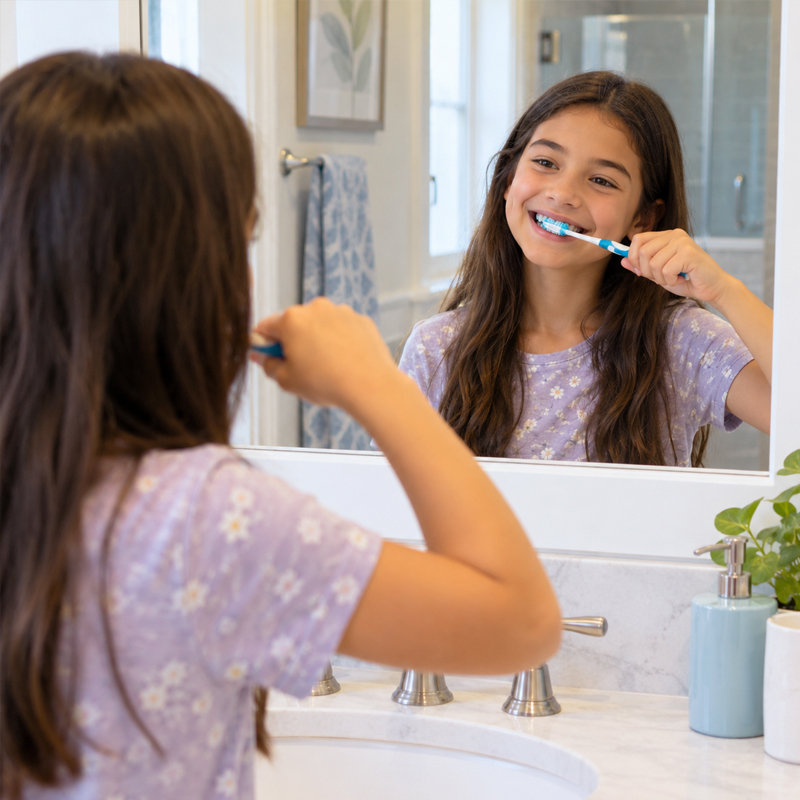
Dental SealantsLearning to brush and floss well is a gradual process. Toddlers and young children need hands-on help, while school-age children can begin taking a larger role in their own dental routine with continued supervision from a parent or caregiver.
As children become teenagers, oral hygiene often becomes their responsibility. Busy school schedules, sports, snacking, and changing routines can make it easy to rush through brushing or skip flossing. Regular dental visits give us an opportunity to reinforce good habits and show teens where additional attention may be needed.
Children and teens wearing braces need to spend additional time cleaning around brackets, wires, and along the gumline because these areas can trap plaque and food. Patients using clear aligners should also maintain good brushing and flossing habits before placing their aligners back over the teeth.
The goal is not perfection overnight. Consistent daily habits, appropriate parental involvement, and routine professional dental care can help children gradually develop the skills they need to care for their smiles independently.
Help Your Child Build a Healthy Dental Routine
Good oral hygiene at home works together with routine pediatric dental care. We can help your child improve brushing and flossing habits while monitoring their teeth and gums as they grow.
Children should generally brush twice each day with fluoride toothpaste. Morning and bedtime brushing can help remove plaque and food while providing regular fluoride exposure to the teeth.
Meet the pediatric dental and orthodontic providers caring for your child's smile.

Schedule a visit with our Parker pediatric dental and orthodontic team.

See what parents and families have to say about their experience at Little Rockies.

Explore preventive, restorative, pediatric dental and orthodontic care for growing smiles.

Kid-friendly dental care designed to keep young smiles healthy as they grow.

Dental care for the changing oral health needs of preteens and teenagers.

Explore braces, growth monitoring and orthodontic treatment for kids and teens.

Learn about clear aligner treatment for appropriate children and teens.

Blog Articles
We care about creating great smiles for kids, and teens. Follow us on our blog to review trending topic and resources in the dental industry and related healthcare.
Hours:
Monday & Friday: 8:00 AM - 2:00 PM | Tues, Wed, Thurs: 9:00 AM - 5:00PM | Closed: Select Mondays and Fridays


Nothing contained on or offered by or through this website should be construed as medical advice and should not be relied upon for medical diagnosis or treatment. By accessing this website you understand and agree to communication by phone, voicemail, email or text.
Cookie Preferences | Cookie Consent | Privacy Policy